fbpx

Chinese Currency, Yuan, and Stock Markets Fall in Reaction to the Trade War

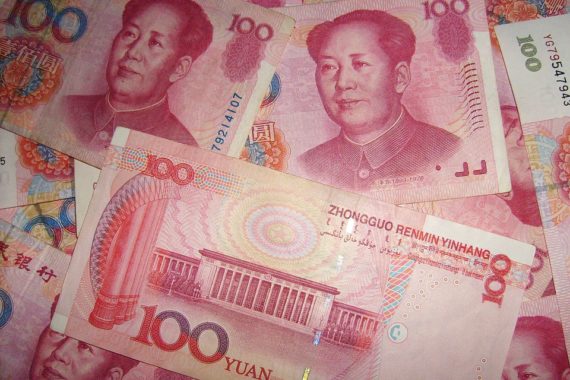
On August 6, the Chinese currency, Yuan, and mainland equities declined. While the yuan fell 0.17 percent to 6.8402 Yuan per dollar, the Shanghai Composite Index closed down 1.3 percent at its lowest since February 2016.For US companies heavily reliant on Chinese labor, Southeast Asia could be an alternative choice for relocating factories, temporary or permanent. – Ziqing Zhang

For more on the global impacts on businesses, see our detailed summary and assessment here.

U.S. Announced Investment & Security Funding to Indo-Pacific

On July 30, FAO Global attended the Indo-Pacific Forum held at the U.S. Chamber of Commerce in which U.S. Secretary of State, Mike Pompeo, announced that the United States will invest $113 million in the Indo-Pacific region to develop technology and infrastructure. This initiative likely intended to counter growing Chinese influence as part of the Belt and Road Initiative (BRI). – Ziqing Zhang

For a more detailed summary and our assessment, read more here.

Myanmar scales back on Belt & Road port project over debt concerns

China’s Belt & Road Initiative (BRI) is facing another challenge in Southeast Asia. On July 5, Myanmar announced it would be ceasing the continuation of billions of dollars of Chinese-sponsored projects. In the beginning of August, sources said that Myanmar was now scaling back on the Chinese-led Kyauk Pyu deep-water port project over cost concerns. – Weiting Li

China–Pakistan Economic Corridor: Issues and Possible Solutions

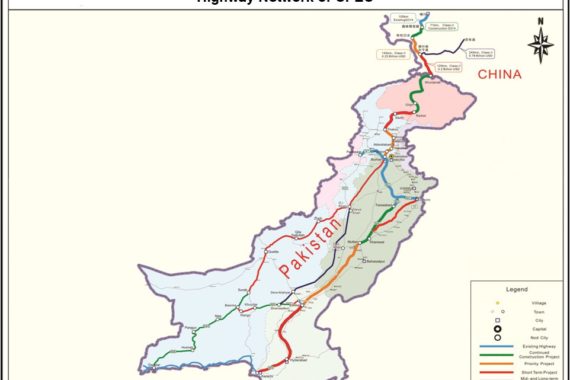
The China-Pakistan Economic Corridor (CPEC) is a collection of various infrastructure projects started on November 13, 2016. It is a flagship program under the Belt and Road Initiative that provides Beijing, direct access to to Gulf of Oman and Arabian Sea. Recently, critics of CPEC (both inside and outside Pakistan) have voiced their concerns over energy and economy issues between the two countries. – Weiting Li

BMW & Great Wall Motors to Produce Electric SUVs in New Joint Venture

On July 10, German automaker BMW and Chinese SUV manufacturer Great Wall Motor reached an agreement to work together to produce electric MINI vehicles, of Mini Cooper notoriety, in China. The joint venture will be called Spotlight Automotive Ltd and will focus on researching, developing, and manufacturing electric vehicles. – Weiting Li

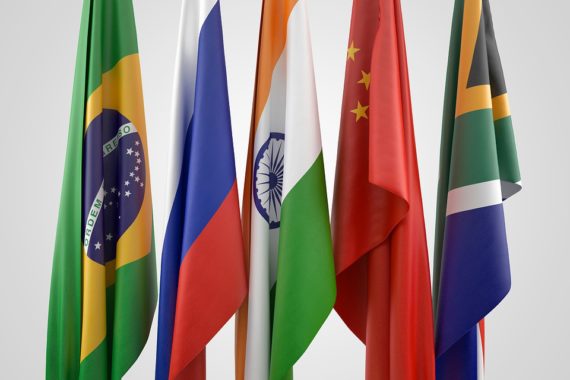
BRICS Summit in Johannesburg, South Africa Considered Successful

On Wednesday, July 25, 2018, South African President Cyril Ramaphosa opened the 10th BRICS (Brazil, Russia, Indian, China, and South Africa) summit in Johannesburg, South Africa. A number of major agreements concluded the summit, including… Read more for our assessment and detailed summary. – Ziqing Zhang

U.S. House Passes New Bill to Limit Chinese Investment

On July 26th, the U.S. House of Representatives passed the John S. McCain National Defense Authorization Act for the following year (2019) by a vote of 359-54. This large majority vote revealed rare bipartisan support for the $716 million US dollar (USD) bill. – Weiting Li

China Intelligence Brief: June 2018

The China Intelligence Briefs are the start of a global initiative to provide context and recommendations to businesses, non-profit organizations, and policy makers who are looking for specific examples of opportunity or disruption from global events. While analyzing the macro problems we often identify specific issues that affect our clients and readers. Identifying both opportunities & challenges allow us to better identify solutions at home and abroad for a wide range of disciplines. In addition to the China Intelligence Briefs, we maintain detailed notes from interviews, overseas trips & business missions, conferences, conventions, and private events.
We provide access to these notes and other analytical products for clients and paid subscribers daily.

Belt and Road Initiative Making Progress in Africa

On July 25th, Chinese President Xi Jinping visited Johannesburg, South Africa for the 10th BRICS (Brazil, Russia, India, China, and South Africa) summit. During his visit, Xi signed Rwanda and Senegal on to Belt and Road Initiative (BRI) projects, though additional details are still forthcoming. In order to take advantage of the opportunities associated with the upcoming China-sponsored construction projects, American small and medium companies should consider entering joint-ventures with Chinese companies, especially construction companies.

China’s New Foreign Investment Policy Cracks Investment Opportunity Window

On June 28, Chinese officials announced the loosening of restrictions on foreign investments in a variety of industries in the country’s 12 free trade zones, ranging from agriculture to banking. China’s Commerce Minister Zhong Shan stated that China “will continue to defend the global multilateral trading system” and that this move was part of a greater plan to continue opening up its market to the world. China’s National Development and Reform Commission (NDRC), the top economic planning organization for the country, published the latest version of the Special Administrative Measures on Access to Foreign Investment 2018, also known as the “negative list,” a document that enumerates which industries foreign firms are prohibited from investing in. The number of sectors on the list is now just 48, a noticeable drop from 2017’s 63, and 2011’s 120. For the sectors not listed in the publication, foreign firms (on paper) are given equal treatment to domestic companies although recent surveys by the American Chamber of Commerce indicate a different picture. Many experts argue the changes are mostly superficial but the reduced list does provide opportunities for foreign investors to take advantage of.